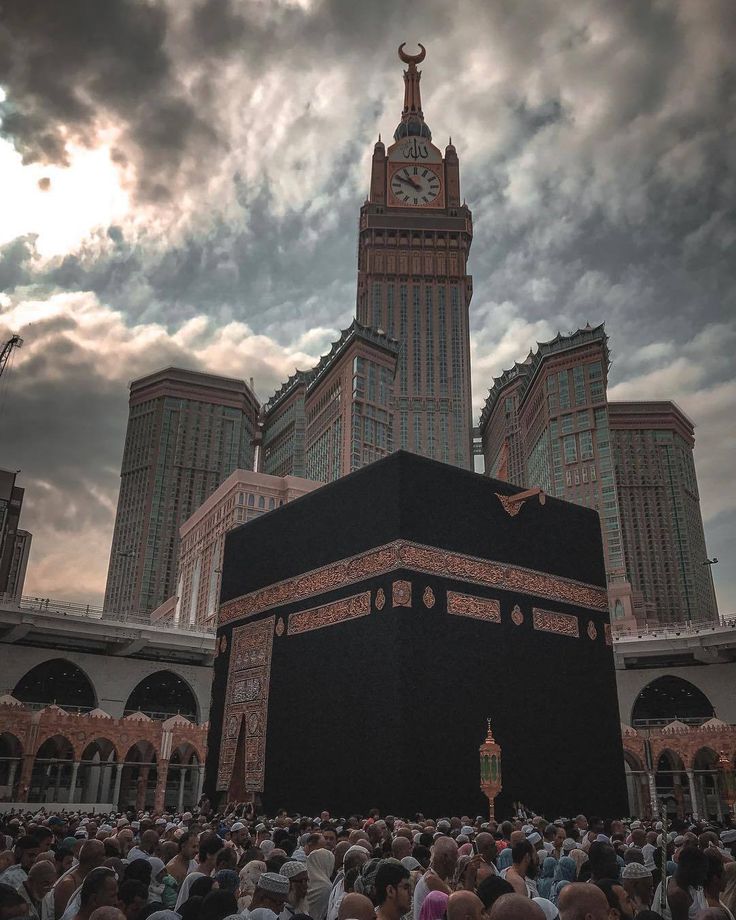
Hajj is one of the 5 Pillars of Islam and is known as maʿlūm min al-dīn bi-l-ḍarūra meaning it is known in the religion by necessity It is mentioned within the Quran (2:125) seen practiced in the Sunnah of the Messenger of Allah whom he himself practiced the Hajj, Allah SWT instructed the Muslims to preform hajj and no one denies it (Hajj) except they go against the Ijma of the entire Ummah from all different schools, if you deny it you effectively become a kafir and will be outside the fold of islam for your kufr if you do not repent and recant this statement. Failure to go on Hajj is not kufr but is a sin at most and excused for those who cannot make the trip for legitimate reasons. Previously Hajj was a difficult journey prior to the invention of cars and planes so the weak would be excused but today you can reach Mecca within a day but it has become expensive and the poor are excused, we have seen hajj become difficult once more but for a different reason. The word for hajj in English is Pilgrimage which loosely translates to taking a prolong journey for the purpose of spiritual or devotional intentions
To whom does Hajj Apply to and what are its 4 principles?
Hajj is obligatory upon every sane able bodied financially capable Free non enslaved Muslim. If a Non Muslims attempts the Hajj and completes it, it is as if he had not done hajj because hajj is only valid when a Muslim preforms it not to mention a kafir should not be in mecca in the first place. The prophet ﷺ said in a hadith narrated by Umar b Al khattib “I will expel the Jews and Christians from the Arabian Peninsula and will not leave any but Muslim. (Sahih Muslim 1767)” The scholars of Islam different upon where does the boundaries of Arabia start and end but surely the strongest opinion is that it is the entire Peninsula and it is inferred that the Arabian Peninsula not have any permanent residence who are disbelievers only travelers and traders who will leave shortly after. In the Modern context the its inferred the Muslim authorities would deny residency Visa for Non Muslims but only short Visas relating to business and surely if they cannot be granted residency permission its expected the Muslim authorities would not build houses of shirk to aid and accommodate their kufr.
The 4 principles of hajj are as follows
- 1. You must enter a state of Ihram during the months of Shawwal, Thul IQa’dah and Dhul Hijjah
- 2. Circulation
- 3. Jogging between safa and marwah 7 times
- 4. Staying at Mt Arafat for at least 1 hour before the eve of sacrifice
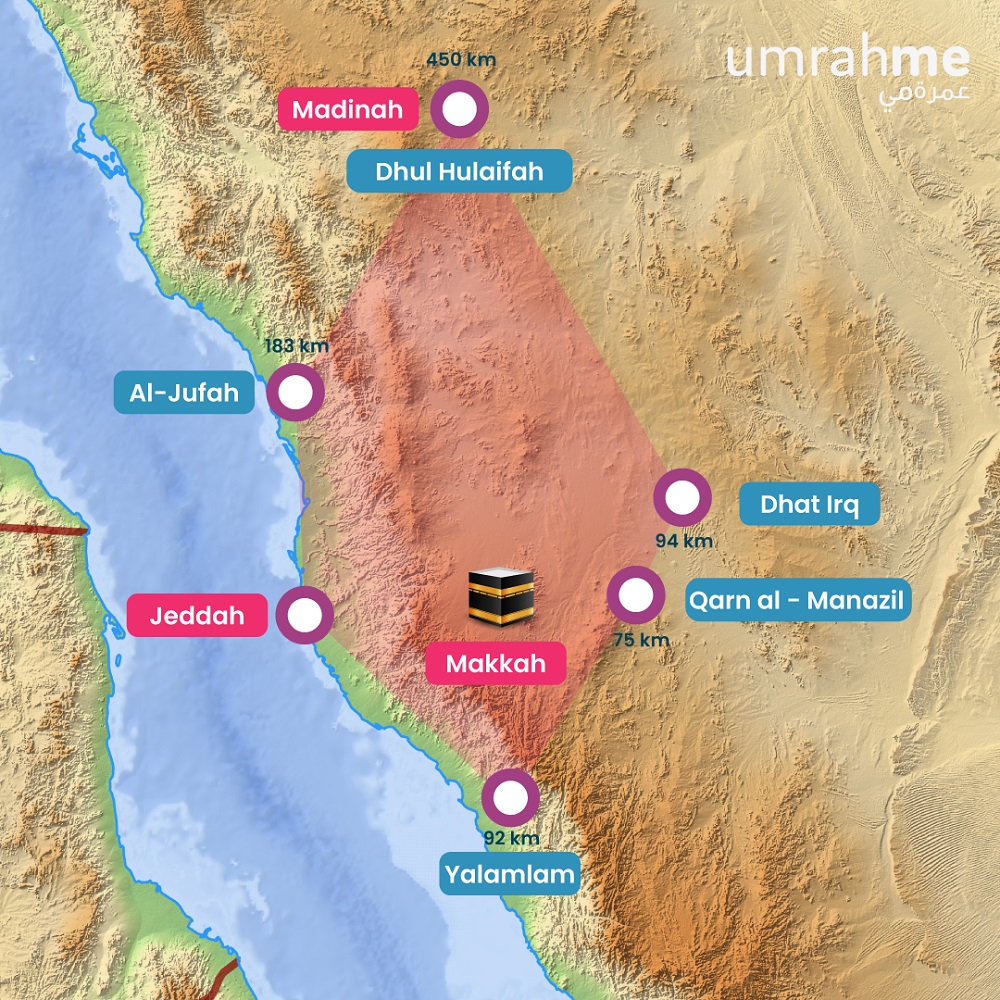
Before we continue we must expound upon each of the 4 principles starting with Ihram. In order for your ihram to be valid you must be in a specific place and that ihram station is called a “Miqat”. The Miqat for someone coming from Medina is the “Dhul hulaifah” station, for someone coming from the western direction (Egypt, Tunis, morocco) they must enter Ihram at the “Al Juhfah” station, for someone coming from the southern direction such as Yemen they would enter Ihram at the “Yalamlam” station, as for someone coming from the east such as Iraq or Iran would enter Ihram from the “Dhatu Iraq” station. The station of Iraq was established by Umar Ibn Khattab as he contributed and lived during the time in which Iraq was conquered and entered the sphere of the Muslim world so if you use that station for Ihram know Umar Ibn Khattab is responsible for that station. Further more after having entered into the station its expected that you have made a specific intention to enter Ihram, its enough to walk into a ihram store and buy ihram to be considered valid intention also its expected that you would have bathed and are ritually cleaned, not wearing sewn clothing, established 2 rak’ah and make “Al Talibiyah” call.
The rules of Ihram prevent a male from covering his head or hands while in the state of ihram so that that you would not be shielded from the heat or cold of the weather at the time, men also cannot wear jewlery during Ihram. The Ihram of a woman is different in the fact that they are allowed to cover their faces during the state of Ihram is they so choose too although it is prefered that she should leave it uncovered. From this Scholar who hold the view that the Niqab is fardh upon Muslim women because in hajj she is asked to take it off signaling that normally her face would be covered and from those who take the opinion that niqab is fardh they agree that during hajj she should uncover her face. It is expected that you are in a state of ritual purity as well and physical purity before you enter the state of ihram not after and you should not engage in sexual contact or things that lead to it while in ihram or your hajj is not valid.
The 6 obligatory acts in Hajj
- 1 Freedom from ritual and physical impurity before entering Ihram
- 2. Covering your awrah in clothing that is not sewn together (The exception in the maliki madhab are young children)
- 3. Walk around the Kaaba with the kaaba being on your left side (Counter clock wise)
- 4. You do the tawaf 7 times
- 5. You do not enter inside of the kaaba but that you be on the outside of the kaaba
- 6. You do 2 rakaat after the 7 tawaf
Additional sunnahs and etiquette’s
- 1. Doing it while on foot (Elders and paralyzed people are excused)
- 2. Kissing the Black stone during the first rotation (If you are able)
- 3. Touching the Yemeni corner
- 4. Invoking blessing and salutations upon the messenger of Allah
- 5. Jogging the first 3 rounds
The Prophet ﷺ said in a hadith regarding tawaf
Ibn Abbas reported The Prophet ﷺ said, “Circling around the House is similar to prayer, except that you speak during it. Whoever speaks during it, let him speak nothing but goodness.” Al-Tirmidhi said, “This is practiced by the majority of scholars, that it is recommended for a man not to speak during circumambulation except for a need, to mention Allah, or to spread knowledge.” ( Sunan al-Tirmidhī 960). From this we see that tawaf itself is a form of worship
The Black stone
There are some ignorant people Among the Christians who claim that that the black stone is an idol while knowing that its not to seek to make Muslims doubt their religion and to profit off telling lies about islam and Muslims (May Allah curse them amen). We know that for certain the religion of Allah is free from all symbols and epitomes of shirk and what is like it for the entire Quran is a refutation and rebuke against such practices but let us read from their own religious scripture it is written in what is known as the Old testament in the book of Isaiah verse 6-7 ” 6 Then one of the seraphim flew to me with a live coal in his hand, which he had taken with tongs from the altar. 7 With it he touched my mouth and said, “See, this has touched your lips; your guilt is taken away and your sin atoned for.” Here in their own bible we are seeing a stone be kissed and sins being atoned for but will we see them rebuke this passage of the countless other time the bible refutes and condemns them? The difference between the sincere and the insincere is clear as is falsehood clear from error.
Safa and Marwah
The significance of Safa and Marwah is in the fact that Hajar the wife of Ibrahim upon the command of Allah to Ibrahim were left out in the harsh deserts of Arabia in a valley that did not have a sign of life, she then found the Mountain of Safa and she ascended it to be able to see farther in hopes of seeing civilization but she found no one then after she crossed a valley until she found the Mountain of Marwah where she ascended until she reached it and looked to find signs of life but found nothing and she repeated these steps 7 times! When she reached Marwah for the last time she heard a voice which then revealed itself as an angle and with its heel or wing into the ground until from it water began to flow and that is the well of ZamZam today! From this short explanation we can see that when you visit Safa and Marwah you are following in the footsteps of the wife of Ibrahim Hajar whom we love and adore greatly!
Arafat
You would encamp at this place before the eve of sacrifice, in the classical text riding upon a beast would be preferred if it brings no harm to the animal and it mentions that standing is better than sitting in Arafat ( women are not obliged to stand) and for males they should not sit unless absolutely necessary (Dehydration, being elderly etc) also mentioned is standing with the imam during the afternoon is wajib. If you leave the standing off in Arafat with the imam you left off a fardh act you must pay in blood (a Sacrifice).
The commentaries mention you must stay for an hour, previously the world did not have phones and clocks, an hour generally means spend a good amount of time there. For those with access to modern time tracking technology you should spend 1 hour there our near to an hour but simply checking the time that has elapse once an hour as elapse you can rest knowing you have fulfilled your obligation. There is some room for error (in time calculation) just as in Ramadan as you do not need to watch the clock for the exact time but rather approximate the elapse time is permissible. Hajj will end with the day of Eid, then you would sacrifice a animal to commemorate Ibrahim’s willingness to sacrifice his son for the sake of Allah.
The sacrifice of Ibrahim
The story of Ibrahim is the story of absolute devotion to Allah, The prophet Ibrahim was instructed during a divinely inspired dream to sacrifice his son and upon hearing the command Ibrahim spoke to his son (Ismaeel) and informed him of the dream upon which Ismaeel accepted to be killed and upon the time to kill Ismaeel the knife did not cut but Ibrahim had fulfilled the dream and command of Allah and a alternative sacrifice was ordered in place of the son of Ibrahim and the Muslims now commemorate that willingness to sacrifice just as Muslims do with hajar!
Umrah
Umrah is known as the lesser hajj, it is a prophetic tradition that should be preformed at least once a lifetime and is halal to do it more than once (but makruh). Everything in umrah is the same as hajj except standing on arafat! There are 2 different types of miqat stations to enter ihram, one type is the Directional miqats which are the same as the miqat from hajj for each of the 4 directions and the other type is called “Hill” not to be confused with the English word hill as well as “Ji’iranah, you can do umrah all days of the year.
Differing opinions on doing Umrah frequently
sheikh abu hassan ad shadily says It is makruh to do umrah more than once a year, it is said people when they come for hajj they should not stay there so that their hearts do not become used to it thus umrah in your mind loses its mystique and you will not see it as something significant” sheikh abu hassan ad shadily says do not do it more than once a year but there are other Imams who do not have an issues with going more than once a year. Among the wisdoms of not doing umrah excessively is that you free up space for other Muslims to visit the house of Allah. your Umrah becomes invalidated by sexual contact provided it took place before completion of all of the arkam, Do not have sexual contact wait until you are finished least your umrah be spoiled.
Visiting the grave of the prophet before or after the completion of umrah
If someone has done hajj or umrah they are able to visit the grave of the prophet and his companions who are buried in proximity of him. The permissibility of visiting the grave something that has differing opinions determined by how and why you have gone there and what your creedal beliefs are. All Muslims agree that going to the grave site is something that is allowed but provided it is done in a correct manner free from shirk and exaggerations
The prophet ﷺ said regarding the grave
‘Ā’ishah reported that, during his terminal illness, the Messenger of Allah ﷺ said: “May Allah curse the Jews and the Christians, they took the graves of their prophets as places of worship.” She added: “Had it not been for that, his grave would have been made prominent, but it was feared that it might be taken as a place of worship.
Etiquettes of Visiting Medina and the burial sights of the Sahabah
Its mentioned in the commentary that you should dismount your beast once you have reached Medina the modern equivalent would be to park and walk a portion of the way around the city. When in Medina you put on your best clothes and best perfume (for men) then you visit the prophets masjid, you pray your nafila, You visit the rawda the area between the tomb of the Prophet ﷺ and his minbar inside Masjid Nabawi. Abu Bakr the companion is buried next to the prophet for more than 1000 years, as well as the companion umar who shares that honor. Uthman and Ali are buried elsewhere but they are also of upmost great status! uthman is buried in baqi and Ali is buried in kufa/najaf, he (ali) was killed in Iraq. Abu hassan ad shadily says approach medina on foot but today that is difficult to do considering that the city of medina in modern times Is far larger and thus showing how much medina has changed over the years due to wealth and increase in the abundance of Muslims! For you to enter the city and walk from the far side of the masjid would be sufficient as entering the city on foot.
Aqiqah (sacrifice)
Al ‘ udhiyah means the slaughtering of animals (on eid adha) for the purpose of drawing near to Allah (it is he who commanded it) for every free Muslims young or old male or female even if they are traveling or in their hometown and even if they are on end of hajj or not, it can be done on behalf of your family if you have children or impoverished orphans. Animals are not cheap and considering many Muslims are impoverished this obligation can be waved for our poor brothers and sisters and that’s where zakat comes into play for If you give zakat on eid adha you make it possible for poor Muslims to eat and you paid your zakat obligation as well as your hajj/eid (Islam is a complete system, if we follow it it everything fits into place and solves problems of humanity). The commentary says this is a sunna ayniya a sunna you do for yourelf unless someone is over you such a s if a father does it on behalf of child. In the Maliki school, the opinion is that one sheep should be sacrificed for each boy and girl, as part of the celebration and to distribute a portion of the meat to the poor in charity.
Nafi’ reported:
أَنَّ عَبْدَ اللَّهِ بْنَ عُمَرَ رضي الله عنه لَمْ يَكُنْ يَسْأَلُهُ أَحَدٌ مِنْ أَهْلِهِ عَقِيقَةً إِلَّا أَعْطَاهُ إِيَّاهَا وَكَانَ يَعُقُّ عَنْ وَلَدِهِ بِشَاةٍ شَاةٍ عَنْ الذُّكُورِ وَالْإِنَاثِ
Abdullah ibn Umar, may Allah be pleased with him, was not asked by anyone from his family to provide a newborn celebration but that he would perform it. He would perform a newborn celebration for his child by sacrificing a sheep for each boy and girl. (al-Muwaṭṭa’ 2187,Sahih)
Similar to how you should not proceed the imam in prayer as the ma’mum You should allow the imam to slaughter first and after the imam has made his prayer and made his slaughter, once the imam slaughters then you can slaughter. Who is this imam? It is the imam of the prayer but there are differences of opinion it can be the imam of abassi (Abassid dynasty) the leader of the Muslims the caliph of the Muslims. The book was written with the assumption that Muslims would have had a state that implements Islam but today Muslim nations do not implement Islam but rather they implement western inspired laws that dominate the shariah partially or completely and this is a source of fitna in Muslims lands, (some scholars hold the opinion that Muslims cant even have a jummah without having a Caliph stressing the importance of implementing Islam and how the previous Mulims could not imagine the Muslims without a caliphate governed by shariah)
A person who slaughters a day early or before sunrise his slaughter is not valid, he only gets the meat of the slaughter but none of the spiritual benefits the Muslim should aspire to get. There are minimum requirements to the type and size of animals for slaughter including age
- If it’s a Goat/sheep should be at least 1 years old
- If a cow it should be at least 4
- If camel at least 5 years old
You should avoid animals with any ayid (oddities)
- animal with abnormalities (including birth defects and injuries)
- animal with one eye
- one who is sick and that is evident
- – a emaciated skinny animal without meat and fat
- – animal with a split ear that is pronounced
- – a animal with its ears cut off
- – a animal that has lost its tail
- – a animal with a broken horn (unless its healed) (the word used it dhul like dhul qarnan, it can also refer to a century)
You slaughter on the day of eid and after the imam, if you are able you do it for yourself and behalf of your family and the animal should be normal not abnormal animal.
The hukam of aqiqah
Aqia is the salughters of a animal on the 7th day of of the birth of a child, why the 7th day? The 7th day is also when you give a child a name (modern day you must give name on day of birth for birth certificate) in pre modern times child mortality was very high so they waited a week to be sure the child would not die and if he made it they would name him (although many died after a week) after naming him they would cut his hair. The conditions of the aqiqa is the same as the eid adha (not sick or abnormal animal, face qibla and say bismillah). Imam malik says doing the aqiqa is mustahab and sheikh sharnubi in his commentary said the best name are relating to idabah (Abdullah, abdul) and the hamd (mohammded, ahmed , hameed) also sheep is the best animal for aqiqa. There is a hadith your child name should go well with kunyas so keep that in mind. In regard to the stillborn baby is that they should not be given a name, that is the opinion of some sheikhs.
in regards to the manner of slaughter
How do you do it? The minimum requires are as follows
- -Cutting the throat (jugular, harqoom, wedjadayn)
- – women can also slaughter is not reserved for men only (also during menstrating, post natal bleeding and some allow even during state of impurity but makruh)
- – the cutting must be done in a clean cut or else not valid as a slaughter (swiftly cut the jugular)
- – if you cut the animal from the spinal cord (back of neck) then its not a valid slaughter
The mustahabat of slaughter are are follows
- Put the animal on the right side facing the qibla (if not facing qiba you can still eat it)
- Say Bismillah allahuakbar (you can just say bismillah, in madawnnah its written you must say both)
 Authentic Maliki
Leave a comment