Download Link Below ↓
Introduction to the author and the meaning of the title
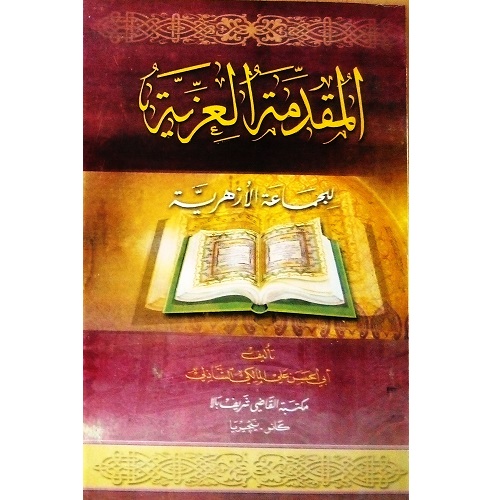
We are studying the book called “Muqadmat al izziyah”, in the Arabic Language (Islamic) Scholars often times make the titles of their books rhyme. This is something unique in Arabic language done to show the authors are very talented and multifaceted in the Arabic language. Al muqadimat means introduction, Izziyah means the glorious, al jamaat al azhariyah the people of Cairo.
The Authors full name and aliases
The author of this book full name is Noor ad deen (Light of the religion) Abu Hassan Ali ibn Mohammed (1), Ibn Mohammed (2), Ibn Mohammed (3) Ibn yakhlaf Ibn Jabril al Munufi Al Masri Al Maliki (The Maliki Egyptian) There are 3 Ibn Mohammed’s (sons of Mohammed) he is a product of the 3rd generation of men named Mohammed in his patrilineage. His Given name was Ali He is usually referred to as Abu Hassan ad Shadhili al Maliki which sounds very familiar to the name Abu Hassan Ad Shadhili who is one of the most famous Sufi sheikhs of all time who is the founder of the Shadhili tariqah who has a large Tomb erected in the south of Egypt in the Humaithara Red sea Governorate. To distinguish him from the founder of the Shadhili Tariqa we call him Abu Hassan Al Maliki or Abu Hassan ad shadhili al Maliki or Ali Manufi AD shadhili he is also known as noor ad deen abu hassan, his given name is Ali and he is known as Abu hassan ad shadiili. Ali ad shadilli or Ali munufi (Manufi is a reference to his home province) (Sheikh Ali Munfi linage Reference: Al Kawaqib Al durriyah Page 19 )
When was this Sheikh born?
There is not a lot of info available on this sheikh but what I can tell you is that Sheikh Ali munufi was born in the year 857H which correlates to the late 1400s (1453) which is the same year of the fall of Constantinople under the leadership of Sultan Mehmed II marking the end of the Byzantine empire, Sheikh Abu Hassan was born was born in Cairo Egypt but his ancestors originated from manuf hence his name Ali Manufi, The Sheikh studied in Al azhar university with the great uelma of his times some of his sheikhs are as follows, al-Nur al-Sanhuri, al-Shihab bin al-Aqtaʿ, Umar al-Tataʾi, Imam Suyuti, and Kamal ibn Abi Sharif which shows the great scholarly lineage of Sheikh Abu Abu Hassan Al Munufi Ad shadhili. (Reference of his Islamic Teachers: Al Kawaqib Al durriyah page 20-21)
Books written by noor ad deen abu hassan ad shadiili
His teacher Imam jalal ud deen al suyuti also wrote extensively in all fields. Imam Suyuti was one of the teachers of Sheikh Abu Hassan Al Munufi Ad shadhili, Imam suyuti is a shafi’I not maliki, the 2 main madhabs of Egypt of shafi’I and Maliki but it has a presence of all madhabs so its not strange he learned from different madhahabs. We know that sheikh Ali munifi wrote extensively and he even has a sharh of sahih bukhari and Sahih Muslim! He wrote a hashiya on Imam Taftazani’s Aqa’id which a major work on Ashari Aqeedah, a commentary on Risala Ibn Abi Zayd and more, He wrote major works in the maliki madhab and is a scholar who is well established in the madhab of Imam Malik. (Reference for books written by Sheikh Ali Al Munufi Al Kawaqib al durriyah page 23)
The death of the great sheikh
The sheikh distributed a lot of knowledge before he died by Allah’s permission in the year 939h which correlates to the year 1532, he lived so see the ottoman conquest of Egypt which occurred in 1517 in which the ottomans prevailed over the Mamluk sultanate as well all other major events that occurred in his generation. Although this book was originally written in Egypt (North east Africa) it ended up popular in west Africa especially Nigeria. For those who may not know Nigeria is the center of Islam in west Africa and it is maliki in fiqh and well renowned for its pious people and scholars whom have written extensively and greatly enriched the history of the Maliki Madhab! (Reference for the death of the great Sheikh: Al Kawaqib al Durriyah page 26)
Major events that occurred in the life of the sheikh that he would have witnessed
During the period from 1453 to 1535, Egypt experienced several significant events, particularly under the rule of the Mamluks and the later conquest by the Ottoman Empire. Here are some key events in Egypt during this time:
- Ottoman-Mamluk Wars (15th century): The Mamluk Sultanate in Egypt engaged in a series of conflicts with the expanding Ottoman Empire, which eventually led to the Ottoman conquest of Egypt.
- Reign of Qaitbay (1468–1496): Sultan Qaitbay, a Circassian Mamluk, ruled Egypt during this period. He is known for his construction projects, including the famous Qaitbay Citadel in Alexandria.
- Reign of Tuman bay II (1516–1517): Tuman bay II was the last of the Mamluk Sultans in Egypt. His reign witnessed the Ottoman-Mamluk War that culminated in the Battle of Ridaniya and the fall of the Mamluk Sultanate.
- Battle of Ridaniya (1517): Ottoman forces, led by Selim I, defeated the Mamluks in this battle, leading to the capture of Cairo and the end of Mamluk rule in Egypt.
- Ottoman Conquest of Egypt (1517): Following the Battle of Ridaniya, the Ottoman Empire officially took control of Egypt, incorporating it into the Ottoman domains.
- Reign of Ottoman Governors (16th century): Egypt became a province (eyalet) of the Ottoman Empire, and Ottoman governors were appointed to rule the region on behalf of the Ottoman Sultan.
- Construction of the Suez Canal (circa 1499–1500): The construction of a canal connecting the Red Sea to the Nile River was initiated during the Mamluk period, although the project was not completed at this time.
- Rise of Alexandria as a Cultural Center: Alexandria continued to be a significant cultural and economic center during this period, with the famous Library of Alexandria being long gone but the city retaining its importance in trade and scholarship.
These events mark a transitional period for Egypt, shifting from Mamluk rule to Ottoman control, with implications for the region’s political and cultural landscape. The Ottoman Empire would continue to govern Egypt for centuries to come.
Description of the book and download link
The book “Al-Muqaddimah Al-Izziyah” is a Maliki Fiqh text written by Abu Hasan Al-Maliki Al-Shadhili. It covers various areas of worship and practical life matters such as marriage, divorce, commercial transactions, and inheritance. Although not widely relied upon, it is highly valued for its simplicity and eloquence. The book was originally intended for the community around the Azhar Mosque in Cairo but has gained popularity in West Africa, North Africa, and Sudan. It consists of 11 chapters.
- Contents are as follows
- 1 Purification.
- 2 Ritual Prayer.
- 3 Az-Zakah
- 4 Fasting.
- 5 Spiritual Retreat ‘tikcif .
- 6 Pilgrimage.
- 7 Marriage and Divorce.
- 8 Commercial Transaction.
- 9 Inheritance Shares.
- 10 Obligations, Practices and Etiquettes.
- 11 Epilogue.
 Authentic Maliki
Leave a comment